By Quinn Mercer, BDSM Educator and Consent Workshop Facilitator
Gary Chapman's 5 Love Languages framework — words of affirmation, acts of service, receiving gifts, quality time, physical touch — is nearly forty years old and still one of the more useful models for how people give and receive care. Its usual application is vanilla long-term partnerships, but it maps unexpectedly well onto D/s. The five categories don't just translate; they take on specific D/s-native forms that vanilla applications don't reach.
This guide walks through each of the five, showing how they manifest specifically in D/s contexts, how the Dom-side and sub-side expressions differ, what happens when Dom and sub have mismatched primary languages, and how to work with the mismatches when they can't be resolved. At the end is a 25-question D/s love-language assessment you can run for yourself and share with a partner.
Contents
- Chapman's framework in one paragraph
- Why the model works in D/s specifically
- Words of affirmation — the verbal language of authority
- Acts of service — protocols as love expression
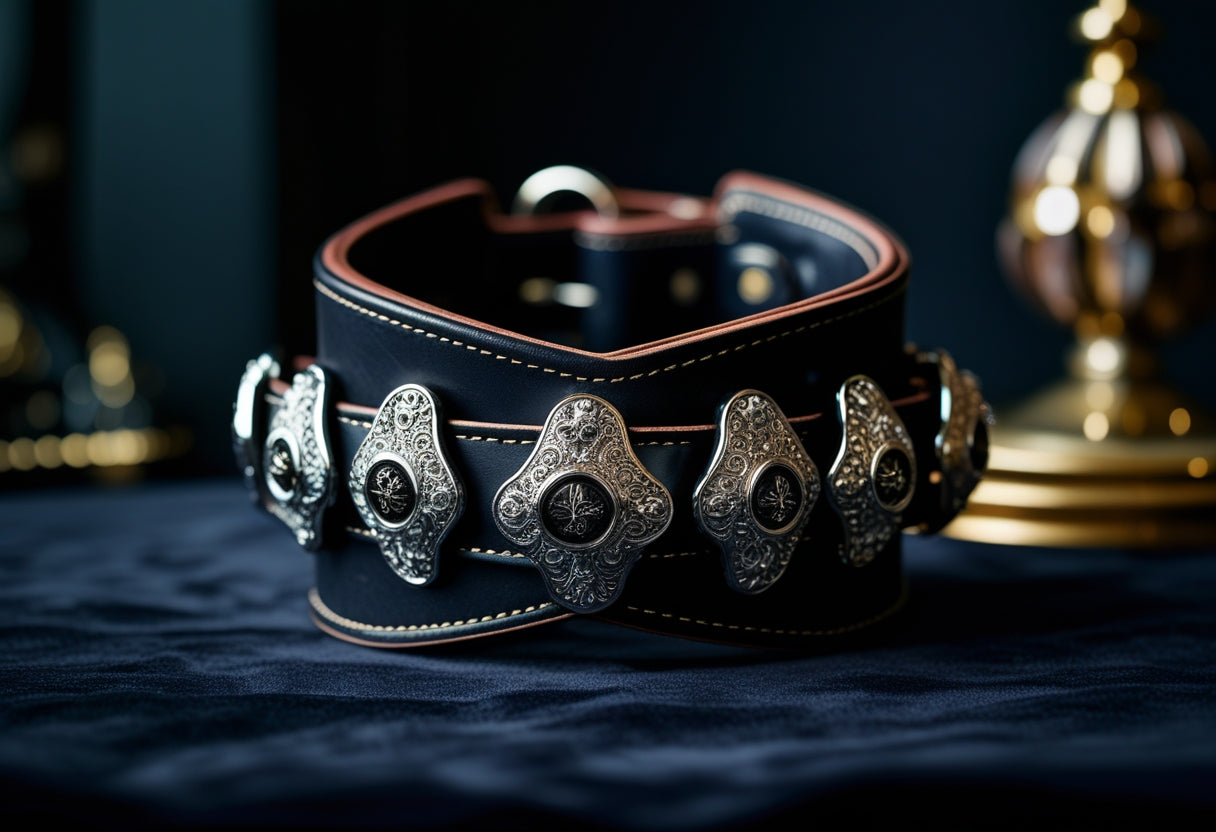
- Receiving gifts — collars, gear, and symbolic objects
- Quality time — held attention as care
- Physical touch — the paradox of impact and comfort
- The four hard mismatches (and how to work around each)
- How D/s stacks languages that vanilla can't
- The 25-question D/s love-language assessment
- What to do this week
- FAQ
Chapman's Framework in One Paragraph
Chapman's premise: people have primary and secondary "languages" through which they preferentially give and receive love. The five are words of affirmation (verbal appreciation, praise, verbal reassurance), acts of service (doing things for the partner), receiving gifts (physical tokens that signify care), quality time (undistracted focused attention), and physical touch (from hand-holding to sex). Partners often speak different primary languages, which means the care one is giving isn't landing in the form the other recognizes. Learning to speak your partner's language — even when it's not yours — is the framework's core prescription. It's not a science; it's a workable heuristic that helps people notice what's actually being offered vs. what would land.
Why the Model Works in D/s Specifically
Three reasons D/s couples benefit from this framework more than vanilla ones, not less.
First, D/s already involves formalized giving. Protocols, rituals, tributes, service — these are structured ways one partner offers care to the other. The 5 Languages framework helps identify whether the structured offering is landing as care or just as procedure.
Second, D/s intensifies each language. "Words" doesn't just mean "you look nice today" — it can mean a sub verbally acknowledging their Dom's authority in ways that vanilla words don't reach. "Touch" isn't just cuddling; it's a scene, a collar being clasped, a hand at the back of the neck.
Third, D/s mismatches produce specific relational problems that don't show up cleanly in vanilla frame. A Dom whose primary language is acts of service (wants their sub to serve them) paired with a sub whose primary is words of affirmation (wants to be told they're doing well) will produce a specific pattern: the sub feels unseen despite abundant serving; the Dom feels unappreciated despite abundant praise. Neither is receiving what they need.
Words of Affirmation — The Verbal Language of Authority
In Chapman's frame, words of affirmation are verbal expressions of appreciation, encouragement, and love. In D/s, this category expands significantly.
How it manifests in a Dom
A Dom whose primary language is words of affirmation gives care by verbally acknowledging their sub's efforts, choices, and being. "You did well today." "I'm proud of how you handled that." "Good girl." "Good boy." Sometimes explicit — direct praise. Sometimes structural — a Dom who narrates the scene ("that's it, keep going") is offering words of affirmation in real time.
Doms with this as primary language often struggle when their sub doesn't seem to register the words — when they praise and the sub doesn't seem to internalize it. This can be a language mismatch (the sub's primary is elsewhere) or a self-worth issue on the sub's side. Sometimes both.
How it manifests in a sub
A sub whose primary language is words of affirmation needs verbal reinforcement of their submission — being told they're a good sub, being told they're pleasing, being verbally acknowledged for what they offer. "Words" language subs often thrive under praise-heavy dynamics and struggle in dynamics where the Dom communicates mostly through silent expectations or non-verbal signals.
They also need verbal reassurance during and after intensity. A silent Dom after a heavy scene can leave a "words" sub feeling that something went wrong even if nothing did.
D/s-specific expressions
The sub verbally affirming choice. "I chose this. I want this. You have my consent." Language subs sometimes need to speak their submission back to the Dom to feel it. Silent submission can feel incomplete to them.
The Dom narrating the frame. Making explicit what would otherwise be implicit — "you're being very good right now" — is language-affirming for both parties when both are primary-words.
Sacred phrases. Words repeated in specific rituals — collaring vows, protocol acknowledgments, pet names that carry weight ("my pet," "my girl") — function as words of affirmation with amplified intensity.
The failure mode
Words subs paired with silent Doms feel unloved even when they're being genuinely cared for. The Dom's care is real but expressed through non-verbal channels the sub isn't tuned to receive. Fix: the Dom deliberately adds verbal channels. Doesn't have to be effusive; can be minimal ("good," "yes," "well done"). But the words have to be there.
Acts of Service — Protocols as Love Expression
Chapman's acts of service is doing things for a partner — chores, favors, tasks. In D/s, this maps directly onto service submission and protocol.
How it manifests in a Dom
A Dom whose primary is acts of service gives care by doing things for their sub — sometimes literal (making tea, running a bath, preparing gear), sometimes structural (setting up their life so the sub has stability, managing logistics, taking responsibility for things the sub finds burdensome). Some Doms are surprised to learn they're service-language Doms; the impulse to look after a sub's day-to-day welfare is a service-language expression even when it doesn't look like "service" as usually meant.
How it manifests in a sub
The most common D/s presentation of acts-of-service as a primary language. Service subs — subs whose specific submission form is doing tasks for their Dom — are usually service-language subs first. Cooking, cleaning, dressing the Dom, protocol tasks, silent-service scenes. The doing is how they express both submission and love.
Some sub tasks look like protocol on the outside but are love expression on the inside. A sub who kneels to help their Dom's shoes off every evening isn't just following a rule; they're saying "I love you" in the form that lands most cleanly for them.
D/s-specific expressions
Protocols as ongoing acts of service. A sub who holds a morning protocol for years is expressing continuous care through structured repetition. Vanilla acts of service tend to be event-based; D/s protocols make service continuous.
Preparation of the space. A sub setting up the play area, laying out gear, making sure everything is ready before the Dom arrives — service in advance. A Dom setting up the sub's environment for their needs before a session — the same, reversed.
Anticipatory service. A skilled service sub notices what the Dom needs before being asked. This is a high-form of acts-of-service language and requires long attunement to develop.
The failure mode
Service subs paired with Doms who don't recognize service as love feel unseen — they're doing enormous amounts of work and it registers as duty, not care. The Dom needs to explicitly recognize service as loving expression, not just as protocol compliance. "I know that took effort and I see it" is often the missing piece.
Receiving Gifts — Collars, Gear, and Symbolic Objects
Chapman's gifts language is about the tangible token as symbol of care. In D/s, physical objects carry unusually heavy meaning.
How it manifests in a Dom
A gift-language Dom gives care by giving objects that carry symbolic weight. A collar. A leash. A ring. A specific item of gear picked out for the sub. Sometimes vanilla gifts as well, but often objects that have D/s meaning attached — a chastity device chosen with care, a piece of jewelry that only reads as jewelry to outsiders. See the formal collaring ceremony guide for the ceremonial weight objects can carry.
How it manifests in a sub
A gift-language sub needs the objects. The collar isn't a symbol they intellectually acknowledge; it's how they feel owned. Removing the collar, even briefly, can produce distress that seems out of proportion until you understand the language operating. Gift-language subs often keep gear meticulously — the objects themselves carry the relationship.
D/s-specific expressions
The collar (in all its forms). Formal collar, day-collar (worn under vanilla clothes), locking collar, symbolic collar. The physical object as ongoing statement of relationship. Gift-language subs often care intensely about the specific collar; substituting it damages them.
Tribute objects. Doms who accept tribute from subs are receiving through gift language on the sub's side — the sub is giving as love expression. Doms who give small tokens back — a specific chosen scarf, a bracelet — are running mutual gift-language exchange.
Gear as claim. A specific flogger only used on this sub. A cage that's theirs. Chastity keys that hang on a specific ring. Objects that are "ours" and only ours function as love language even when they're also functional gear.
The failure mode
Gift-language people paired with anti-gift partners (who see gifts as materialistic or unnecessary) experience their needs as trivialized. Fix: the non-gift partner has to accept that for gift-language people, the object literally is the love, not just a stand-in. Refusing to engage with gift language on principle is refusing to speak the partner's language.
Quality Time — Held Attention as Care
Chapman's quality time is undistracted, focused attention on the partner. In D/s, this shows up in specific structural ways.
How it manifests in a Dom
A time-language Dom expresses care by being fully present — putting phone away, closing the laptop, giving the sub their whole attention for a defined block. The specific form is often the scene itself; a scene is by structure a time when the Dom's whole attention is on the sub. Time-language Doms often extend this beyond scenes — dinners together with no distractions, walks, shared silence with genuine presence.
How it manifests in a sub
Time-language subs feel loved through being the focus. Their Dom's undivided attention — during scenes, during aftercare, during ordinary moments — reads as care. They're the sub most likely to be devastated when their Dom is distracted or checking their phone during their time together.
D/s-specific expressions
The scene as time expression. A well-run scene is by structure the Dom's whole attention on the sub. For time-language subs, this is why scenes feel so meaningful — the scene isn't just an activity, it's the concentrated presence.
Aftercare as focused time. Post-scene aftercare that has the Dom's full attention (rather than distracted or rushed) is a time-language act. See emotional vs. physical aftercare.
Ritual time. Morning coffee together in silence. Evening protocol time. Weekly D/s check-ins with defined start and end and no interruption. Structured time slots that both partners protect.
Long-distance quality time. Video calls with no other devices, scheduled and honored. Text conversations where both parties are actually present. Time-language subs in long-distance relationships need this more than others do.
The failure mode
Time-language subs paired with distracted Doms suffer chronically. The Dom is fond of them and physically present but not attentionally present. Time-language subs read this as neglect even if it isn't intended as such. Fix: defined attention blocks — 30 minutes daily, or one full evening a week, or a specific scene time — where distractions are non-negotiable off. Doesn't have to be all their time; has to be some, reliably.
Physical Touch — The Paradox of Impact and Comfort
Chapman's touch language runs from hand-holding to sexual touch. In D/s, the range extends much wider — because impact play, restraint, and other kink activities are also touch, and touch-language people in kink dynamics experience them accordingly.
How it manifests in a Dom
Touch-language Doms express care through physical connection — hand at the back of the sub's neck, running fingers through hair, holding wrists, ordinary vanilla touch, and the touch involved in scenes. They're often the Doms most attentive to touch in aftercare — cradling the sub, physically holding them through drop. Physical presence is their expressive medium.
How it manifests in a sub
Touch-language subs need physical contact — before scenes, during scenes, and especially after. They feel loved when touched and unloved when not. This can be paradoxical during heavy scenes: they may experience impact as love-touch even when it hurts. Aftercare touch — being held after intensity — is often their most important care requirement.
D/s-specific expressions
Impact as touch. For touch-language subs who enjoy impact, the impact itself is a form of touch language — sustained physical attention delivered through implement. See heavy impact sessions for the physical work; the language layer is that impact-language subs often experience these scenes as love-expression that vanilla frame can't parse.
The claim gesture. Hand at the back of the neck, hand on the throat, arm around the waist that reads to outsiders as intimate but is D/s in feel — small touches that communicate ownership. Touch-language pairs use these constantly, sometimes without noticing.
Bondage as sustained touch. Rope creates continuous physical contact for extended durations. Touch-language subs sometimes prefer rope specifically because it holds them longer than any hand could.
Aftercare touch. The specific form of aftercare where the Dom holds the sub, sometimes for hours, without agenda. Touch-language subs need this without exception after intense scenes.
The failure mode
Touch-language subs paired with touch-averse Doms — or paired with Doms whose only physical contact is during scenes and not otherwise — feel starved. Scene touch alone is not enough for a touch-language sub; they need ordinary touch across the days between scenes. Fix: build in ordinary touch as a daily practice, not just scene-adjacent touch.
The Four Hard Mismatches (And How to Work Around Each)
Mismatched love languages don't kill relationships; they just mean the partners have to work harder to communicate care in a form that lands. Four specific D/s mismatches are worth naming.
Mismatch 1: Service-language Dom + Words-language sub
The Dom shows love by doing things for the sub. The sub needs verbal affirmation and doesn't fully register the acts as love. Result: the Dom feels their care is being missed; the sub feels the Dom doesn't say enough.
Work around: The Dom deliberately narrates their acts. "I'm making you tea because I care about you." "I set up the room for you because I wanted you to have this." Attaching words to the service closes the language gap without either partner having to abandon their native mode.
Mismatch 2: Gift-language sub + Anti-gift Dom
The sub reads the presence or absence of gifts (including collars, gear, tokens) as measure of love. The Dom sees gifts as unnecessary or performative. Result: the sub is chronically insecure about the relationship's status; the Dom is confused about what the fuss is.
Work around: The Dom accepts that for this sub, one recurring symbolic object is not indulgence — it's the required expression. Doesn't have to be expensive; has to be present. A specific ring, a chosen pendant, a day-collar. Once. Not a series. The Dom's cost is minimal; the sub's need gets met.
Mismatch 3: Touch-language sub + Time-language Dom
Both are present-oriented, but they read different presence forms. The sub needs to be physically held; the Dom needs distraction-free time together. Result: the Dom offers focused time (no phone, direct conversation) that reads to the sub as cold. The sub offers physical closeness that reads to the Dom as distracting from real presence.
Work around: Combined structures. Time blocks where physical contact is expected (holding hands during the conversation, sub in Dom's lap for the check-in, spooning during the shared silence). Both languages get spoken in the same act.
Mismatch 4: Words-language Dom + Service-language sub
The Dom praises effusively but doesn't ask for much. The sub wants to serve but isn't given tasks. Result: the sub feels the Dom doesn't want their service (which reads to them as not wanting their love). The Dom is confused because they're praising and receiving no visible response.
Work around: The Dom gives more tasks. Not busywork; genuine acts of service that meet real needs. This satisfies the sub's need to express through doing and gives the Dom something concrete to then praise.
How D/s Stacks Languages That Vanilla Can't
One of the framework's insights: D/s can compress multiple languages into single acts in ways vanilla can't.
Consider a collaring ceremony. It's a gift (the collar itself), physical touch (the clasping), quality time (the ritual demands undivided attention), words of affirmation (the vows), and often acts of service (the preparation both parties do for it). One event, five languages spoken at once. Vanilla weddings do something similar but with less structural intensity. D/s rituals routinely stack languages.
The same applies to well-run scenes. Setup is service. The scene itself is touch and time. The praise during is words. The gear used may be gift-marked. Aftercare stacks all of them. Both partners are receiving in their primary language regardless of what it is.
This is one reason well-structured D/s dynamics can feel disproportionately fulfilling — the language density per interaction is high. Vanilla partners speaking only one language per exchange have to accumulate slowly. D/s partners exchanging in stacked-language events can be nourishing multiple languages in each ritual.
Your love language doesn't change when you enter D/s — but the D/s frame gives you new forms in which to speak it. The Dom who thought they couldn't do gifts finds themselves choosing collars with care. The sub who thought they weren't verbal finds themselves needing to say "yes, my Dom" every morning. The framework adjusts; you don't have to.
The 25-Question D/s Love-Language Assessment
Answer each question 1–5 (1 = strongly disagree, 5 = strongly agree). At the end, tally by language.
Words of affirmation (Wa)
- I need my partner to verbally acknowledge my submission/dominance for it to feel real.
- Praise during a scene ("good," "you're doing well") intensifies my experience of it.
- Silence after intensity from my partner feels wrong to me, even brief silence.
- Saying pet names or ritual phrases ("my sir," "my girl") lands in me as connection, not performance.
- A partner who doesn't tell me they love the dynamic wouldn't feel like they do.
Acts of service (As)
- Doing tasks for my partner (or having them done for me) feels like love, not just protocol.
- I feel most connected when I'm actively serving or being served in a structured way.
- A partner who wouldn't accept my service or wouldn't do things for me would feel emotionally distant.
- Protocols carrying practical function ("bring me my coffee") matter to me more than symbolic ones.
- I express care through what I do more than through what I say.
Receiving gifts (Rg)
- The collar (or equivalent symbolic object) is not just a symbol to me; it is the relationship.
- Gear that's specifically ours means more to me than gear used generically.
- The absence of physical tokens between us would make the relationship feel less real.
- Choosing a specific object for my partner (or having them choose one for me) is the deepest expression of care I know.
- I keep gifted items with unusual care; they carry meaning that isn't just sentiment.
Quality time (Qt)
- Distracted attention from my partner feels worse than absence.
- Scheduled protected time with no distractions is essential to me feeling loved.
- The scene itself matters to me because of the concentrated presence, more than the specific activities.
- I would rather have less contact of higher attention quality than more contact that's split.
- My partner putting their phone down when we're together lands in me as real care.
Physical touch (Pt)
- Ordinary touch between us (not just scene touch) is essential to me feeling connected.
- Impact play, restraint, or bondage lands in me as a form of physical care, not just sensation.
- Aftercare without physical holding would feel incomplete to me.
- A hand on the back of my neck (or wrist, or throat) communicates more to me than most words.
- Long stretches without physical contact — even brief ones — leave me feeling unmoored.
Scoring:
Sum each language's 5 questions. Highest total is your primary language; second-highest is your secondary. Compare your primary with your partner's primary. If they match, you're speaking the same language — care is likely landing cleanly. If they differ, use the mismatch-work-around guidance above.
What to Do This Week
- Take the assessment yourself. Score honestly, without editing for what you think you should be. Sit with your primary and secondary.
- Have your partner take it. Not together — separately, then compare. Simultaneous scoring can bias each other.
- Have the "here's what I need to feel loved" conversation. Use the assessment as a starting point. Then get concrete: "I want to hear X once a day." "I want physical touch outside of scenes." "I want a specific object that's ours." Specifics beat categories every time. Give it a full evening.
FAQ
Can love languages change over time?
Yes. They shift somewhat with life circumstance and relationship phase. New relationships often over-weight physical touch; long relationships often shift toward quality time or acts of service. D/s intensity can bring words of affirmation to the fore for people who wouldn't have called it primary otherwise. Reassess yearly.
What if I don't have a clear primary language?
Some people score similarly across three or four. That means you're relatively omnivorous — most forms of care land for you. This is unusual but not a problem. Focus on what specifically has been missing when you've felt unloved; that's your practical primary regardless of what the assessment says.
Does this framework work for switches?
Yes, and switches sometimes have different primary languages in each mode. The sub-mode primary might be different from the Dom-mode primary. Both can be true. The 25-question assessment can be taken twice — once for how you receive as sub, once for how you receive as Dom. See dominant, submissive, or switch if you're still working out your primary orientation.
What if my partner refuses to speak my language?
Different from being bad at it. Learning to speak a new language is slow; refusing is a different problem. Refusal usually means either the partner doesn't understand the framework or doesn't accept that your need is legitimate. The first is educational; the second is a values conflict that has to be addressed directly. See when your partner wants a kink you don't for the general shape of that conversation.
Does Chapman's framework apply to poly-D/s?
Yes, and it gets more useful in poly-D/s because you have multiple partners potentially requiring different languages simultaneously. See poly kink for the specific challenges. Running the assessment with each partner helps clarify why one partner needs different behaviors from another — it's often language mismatch, not preference.
What if I score high on receiving gifts but it feels shallow to say so?
Cultural noise about gifts being materialistic. In practice, gift-language people are often the most careful about small, meaningful, specific items rather than expensive ones. The language isn't about consumption; it's about the object as symbol of care. Nothing shallow about it.
Can this framework diagnose why a D/s dynamic feels off even though everything seems right on paper?
Often, yes. "Everything seems right" but "nothing lands" is the classic language-mismatch signature. The scenes happen, protocols run, both partners are attentive — and both still feel unmet. Run the assessment. There's a good chance you'll find the missing piece.
Can I still love someone whose language is completely different from mine?
Yes, and most relationships do involve some mismatch. The framework isn't about matching; it's about translating. Speaking your partner's language means expressing love in the form they can receive it, even when it's not your native form. The best long-term dynamics have both partners bilingual — able to give in their own language and receive in the other's.
Related reading:
- Attachment Styles in D/s — the underlying attachment layer that shapes language
- Trust in Long-Term Power Exchange — trust is the frame languages operate inside
- Emotional vs. Physical Aftercare — aftercare form maps to language
- Formal Collaring Ceremony Guide — the ritual that stacks all five languages
- Marriage With a D/s Dynamic — language work over decades
- Poly Kink — running multiple languages simultaneously
- Dominant, Submissive, or Switch — switches often have two primaries